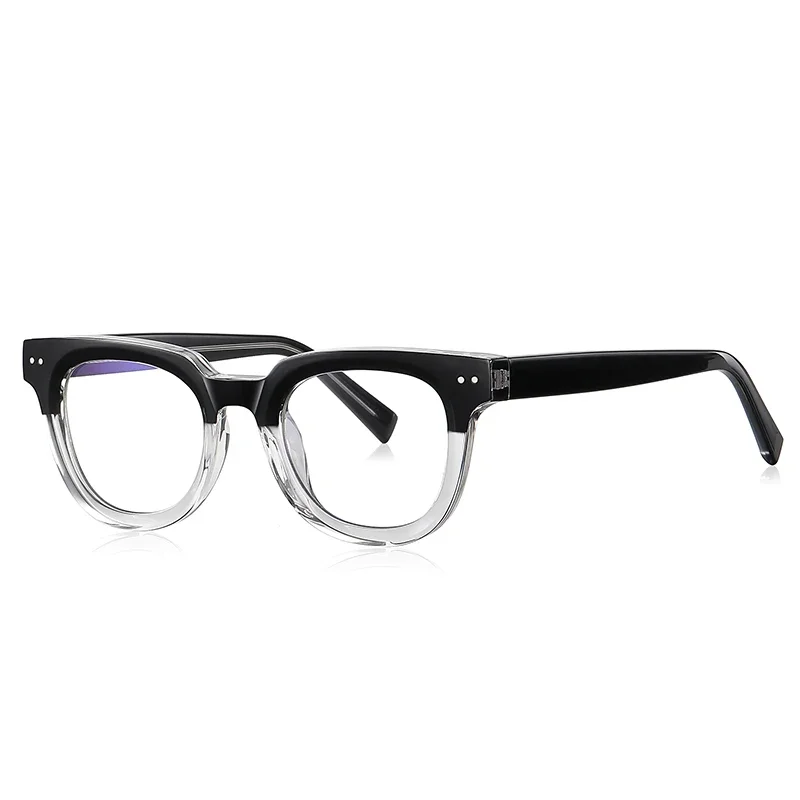
I needed reading glasses, but not just for books. I needed them for computer work and checking my phone. Constantly swapping between standard readers was driving me crazy. What I really needed were progressive multifocal lenses—glasses that could handle distance, my computer screen, and my phone all at once.
Like many people, I started with a cheap pair. I used to think glasses were just glasses. I was wrong. When it comes to complex progressive lenses, quality truly matters. Cheap glasses can strain your eyes and often fail to block blue light effectively.
This is my journey from disposable cheap readers to a solid, stylish pair of VICKI Retro progressive multifocal designer reading glasses.
Here’s what I gained by upgrading:
My first pair of so-called "progressive" lenses cost $20 from a large online retailer. They seemed like a bargain. They lasted about three weeks before the lenses were too scratched to use and one of the arms snapped right off. They were essentially garbage.
The problem with super cheap glasses isn't just the frame. It's the lens quality, especially with multifocal types. The area where distance vision shifts to reading vision—the progressive corridor—was tiny and blurry. I constantly had to tilt my head just to find the right spot.
I kept having to buy new pairs. I went through four pairs in six months. That's $80 spent, and I never had a comfortable set of glasses.
Here’s what typically goes wrong with $20 readers:
After my cheap experiment failed, I decided to upgrade slightly. I found a pair for $40, marketed as having "durable hinges" and "lightweight frames."
They were... fine. They worked better than the $20 ones. The hinges didn't snap after three weeks, which felt like a win. The frame was slightly better, feeling like thicker plastic instead of something brittle.